May 2026

Explore Northeast India with the Perfect 7 Sisters Tour Package

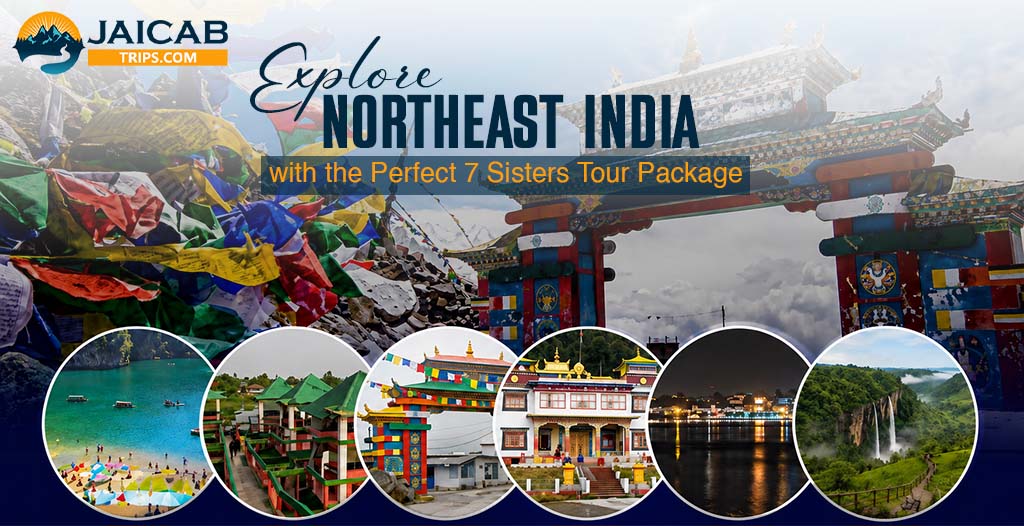
Imagine waking up to rhinos grazing in a misty national park. Then, standing under a waterfall so tall it disappears into the clouds. Then, sitting in a tribal village, sharing smoked pork and bamboo shoot curry with a Naga family. All in one trip. That is what the 7 Sisters Tour Package does. It takes you deep into Northeast India – one of the world’s most extraordinary and least-visited travel destinations. Most travellers never make it here. You will. What Is the 7 Sisters Tour Package? Northeast India is home to seven incredible states. Together, they are called the Seven Sisters: Assam Meghalaya Arunachal Pradesh Manipur Mizoram Nagaland Tripura Each state has its own culture, cuisine, landscape, and tribal heritage. The 7 Sisters Tour Package is a curated travel experience that takes you through all seven. One trip. Seven worlds. Why Visit the Seven Sisters States? Most travellers have never truly explored Northeast India. That is their loss and your opportunity. Enjoy the untouched beauty of nature- rainforest, snow-clad mountain peaks, and exciting root bridges. Explore the old heritage and tribal culture, as old as 200 years. Explore UNESCO-recognised sites like Mawsynram and Majuli Island. Watch leopards, one-horned rhinos, and deer. You will not see over tourism. It is less crowded and quieter. Take the authentic experiences of village homestays, tribal festivals, and local food. You can unlock the best-kept secrets by choosing the right 7 Sisters Tour Package. 12-Day 7 Sisters Tour Itinerary The 12-day 7 Sisters Tour itinerary will provide you with an overview of how you will schedule your next trip. Day 1 – Arrive in Guwahati, Assam From  Lokpriya Gopinath Bordoloi International Airport- check in to the hotel. Freshen up after you check in, and have breakfast. Visit the sacred Kamakhya Temple – one of the most important pilgrimage sites in India. Walk along the Brahmaputra Riverfront in the evening. Have an authentic Assamese dinner. Explore Guwahati. Day 2 – Sightseeing in Guwahati Wake up early. Go to Umananda Temple. Have a ferry ride while visiting the temple. Have a vivid look at the Assam State Museum. Explore the history of Assam. Now ready to roam the famous silk-weaving village at Go for local shopping at the fancy Bazar. You will stay at Guwahati. Day 3 – Kaziranga National Park, Assam Wake early, drive for 4 hours to reach Kaziranga. Experience the holy feeling of the Sattra – Vaishnavite monastery. Get to watch the real mask-making. Have an evening jeep safari. Enjoy the wildlife beauty. rhinos, leopards, tigers, and various migratory birds. Thrilling mix of excitement. Overnight stay at a jungle resort. Feel the mysterious vibe. Day 4 – Itanagar, Arunachal Pradesh Take a flight to Itanagar, Arunachal Pradesh. You will be glad to visit the place. Enjoy the beauty of Ita Fort Visit the Buddhist temple and the Jawaharlal Nehru Museum. Go shopping. You will like the Naharlagun market for tribal handicrafts. Night stay in Itanagar. Day 5 – Fly to Shillong, Meghalaya Take a morning flight. Land at Shillong – “the Scotland of the East”. Enjoy the mesmerising view of Elephant Falls and Ward’s Lake. Experience the finest tribal heritage. Visit Don Bosco Museum. Walk in the evening to the Police Bazar for local food and shopping. Stay at Shillong. Day 6 – Cherrapunji & Living Root Bridges, Meghalaya Next day, drive to Cherrapunji – one of the wettest places on Earth. You are there to explore the Double Decker Living Root Bridge. Enjoy the beautiful Nohkalikai Falls. Now experience the natural limestone cave of Mawsami. Return to Shillong. Overnight stay. Day 7 – Fly to Agartala, Tripura Take the first flight to Agartala, the capital of Tripura. Fresh up. Have breakfast, then relax. Have the experience of the Royal Museum of the Ujjayanta Palace. Day 8 – Agartala Stay Watch other palaces like Neermahal, which is on the water of Rudrasagar Lake. Visit the Famous Sundari Temple at Udaipur (one of 51 Shakti Peethas). Night Stay at Agartala.   Day 9 – Fly to Aizawl, Mizoram Arrive at Aizawl – the capital of Mizoram. One of the most underrated cities of the North East. Do not miss the Mizoram State Museum. Explore Durtlang Hills. Evening walk at Bara Bazar -a lively local market. Feel blessed to obtain Mizo hospitality and cuisine. Overnight in Aizawl. Day 10 – Fly to Imphal, Manipur Take the morning flight to Imphal. Welcome to the city of wide valleys. Gentle vibes will freshen you up. Enjoy the freshwater lake of Loktak Lake. Visit Phumdis and Keibul Lamjao. Go shopping. Women love to visit Ima Keithel for its immense variety of clothes. You can study the Manipuri king’s palace at Kangla Fort. Overnight in Imphal. Day 11 – Fly to Dimapur Take a flight to reach Dimapur. To get to Kohima by car, you will have to travel for 3 hours. Be excited to learn about the Kohima War Cemetery. It is a historic reminder of the 2nd world war. Explore the open-air Naga Heritage Village museum and learn about the rich culture of the Naga tribes. Enjoy the real Nagas at their own restaurant. Enjoy smoked pork, axone (fermented soybean), and bamboo shoot chutney. Day 12 – Goodbye | Departure Fly from Guwahati back to your home city – carrying memories that will stay with you long after the journey ends.  Your Package at a Glance  Everything you need is taken care of -from the moment you land to the moment you leave.  Best Time To Visit Season Months What to Expect Best Time October – April Cool weather, clear skies, festivals, and wildlife spotting Avoid June – September Heavy monsoon, possible landslides, travel delays Festival Season November – January Hornbill Festival, tribal fairs, winter blooms, and cultural events Inner Line Permit (ILP) – Know Before You Go Some states require a special permit for Indian nationals: Arunachal Pradesh – ILP required Mizoram – ILP required Manipur – ILP required Nagaland – ILP required Foreign nationals need a

Explore Northeast India with the Perfect 7 Sisters Tour Package Read More »
NJP to Gangtok Distance: Complete Route Details, Time & Travel Tips

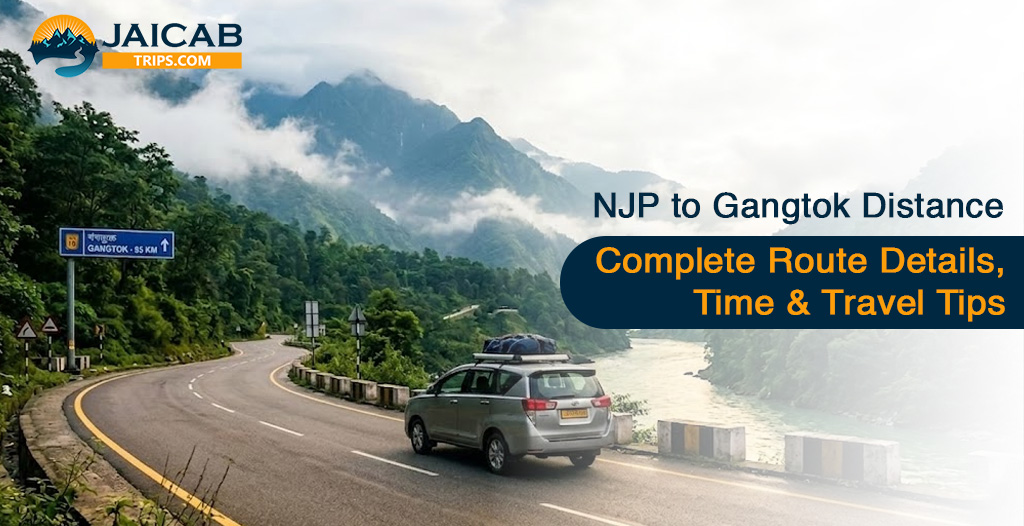
Every great Sikkim story begins with one road, and we’ll make sure yours starts perfectly Are you dreaming of visiting Gangtok?  Then the first thing you need to know is the NJP to Gangtok distance -it is approximately 114 km by road. Do not worry, just plan your schedule. With Jai Cab Trips, a trusted car rental agency, you can enjoy your journey without any headaches. Whether you have arrived at NJP via train or road, you will be heading towards Gangtok with our reliable services. Route Options: NJP to Gangtok by Road The two major highways run between NJP and Gangtok. Both are actually drivable, yet they have different journey times, speed of the road and viewing. Route 1: NH 10, Teesta and Rangpo (Recommended) The main road and route used by almost all shared jeeps, cabs and buses. From NJP or Siliguri, you travel northeast, passing the famed Coronation Bridge over the river Teesta via the Sevoke Road. Then it hugs the banks of the Teesta river perfectly right up to Teesta Bazaar and beyond, with the river rushing past and some small villages set on the hillside. Sikkim is reached via the state’s principal border road at Rangpo, from which the road rises gradually towards the state capital, Gangtok. The NJP to Gangtok distance by road via this route is 114 km, which is well-maintained almost throughout and is the fastest. The average travel time is 4-5 hours. Perfectly suited for first-time visitors. Route 2 : Via Kalimpong For a less hassled and scenic drive to Gangtok from NJP, travel via Kalimpong is a better option. The road passes Sevoke, Kalimpong, Teesta Bridge, and Rangpo before reaching Gangtok. The length of this road is about 140 km and takes about 5-6 hours to reach the place. This road is not busy and ideal for nature lovers. Route 3 : Via Singtam (Alternate) This detour runs from the main road through the less-traveled through the small town called Singtam back to the NH 10 near Gangtok. A bit further out in distance to the location and time, but less trafficked and more rural. Along the way, you’ll pass cardamom plantations, small riverside villages, and quiet stretches rarely seen by tourists. Do Not Just Drive Through – Stop at These Places The NJP to Gangtok road trip is one such thing where the road is as much a destination as it is the trip from NJP. These are the highlight locations: Coronation Bridge (Sevoke Bridge) The Coronation Bridge of Sevoke is a historic suspension bridge that crosses the river Teesta at about 20 km from Siliguri. Constructed in the British times, it is now a beautiful structure and a photographer’s hotspot. Many private cab drivers are willing to stop for a short period if requested ahead of time. Teesta Bazaar It is a small riverside market town that people simply hang out in for tea, some snacks and a thirsty walk, about halfway down the trip. The Teesta river here is a wide, strong and clear river, particularly beautiful in winter and spring. For the others, it is also a popular area for white water rafting (which is a different trip). Rangpo This is the first town which is at the border of Sikkim. All vehicles come to a halt at this checkpoint for checking identification. Rangpo is a crazy little town on the border with shops, tea stalls and a whole other vibe than the plains below. The actual border is where this perceptible change occurs -cleaner air, more green plants, and a slight incline in the road. Singtam On the other route, Singtam is a lovely town with the backdrop of cardamom and tea plantations. It is a hub of roads running towards South and East Sikkim. It’s worth stopping if you are taking the alternate route. The Teesta River Valley (Entire – NH 10 Stretch) One of the most memorable aspects of the whole NJP – Gangtok drive is the Teesta River itself. Along most of NH 10, the road is situated directly on the riverbank, at times only metres above the fast-moving river. The turquoise hue of the Teesta River, with forested cliffs and misty hills on both its sides, makes it one of the most picturesque roads in the entire eastern India. Be sure your camera is available. Transport Options There is more than one way to cover the NJP to Gangtok distance. Here is a clear breakdown of every option available so you can pick what works best for you. 1. Private Cab (Recommended) This is the most popular and most comfortable choice. You take the whole car for your own or your group. No waiting, no stopping/ no strangers. The driver fetches you straight from the NJP station or your hotel and takes you to your exact destination in Gangtok. You can book NJP to Gangtok car rental with jai Cab trips for a hassle-free journey. Perfect for: Family, couple, or senior travellers; for anyone with suitcases Duration: 4-5 hours Cost: Affordable and comfortable. Prices varies ₹3,500–₹4,000 2. Shared Jeep / Sumo The most popular budget choice is for shared jeeps. From Siliguri, they leave from the Tenzing Norgay Bus Terminal on the outskirts of Siliguri (approx 5km from NJP) and refuel en route. The vehicle is designed for the use of 8-10 passengers. It’s inexpensive, but compact and feels tight, especially on the curvy mountain road beyond Rangpo. Perfect for: Budget travellers. Also for a solo experience Duration: 5-6 hours (excluding stops) Cost: Very Affordable. ₹400 to ₹500 per seat (Approx) 3. Government Bus (SNT Bus) There are regular bus services between Siliguri and Gangtok by Sikkim Nationalised Transport (SNT). This is the most inexpensive one on offer. The buses are slower, however, and stop at numerous locations, and may be crowded. Buses run from the SNT bus stand at Siliguri. Ideal: Budget travellers with flexible timing Duration: 6-7 hours Cost – It is around ₹ 200 to ₹250 per

NJP to Gangtok Distance: Complete Route Details, Time & Travel Tips Read More »

NJP to Darjeeling Distance: Everything You Need to Know Before You Plan Your Trip

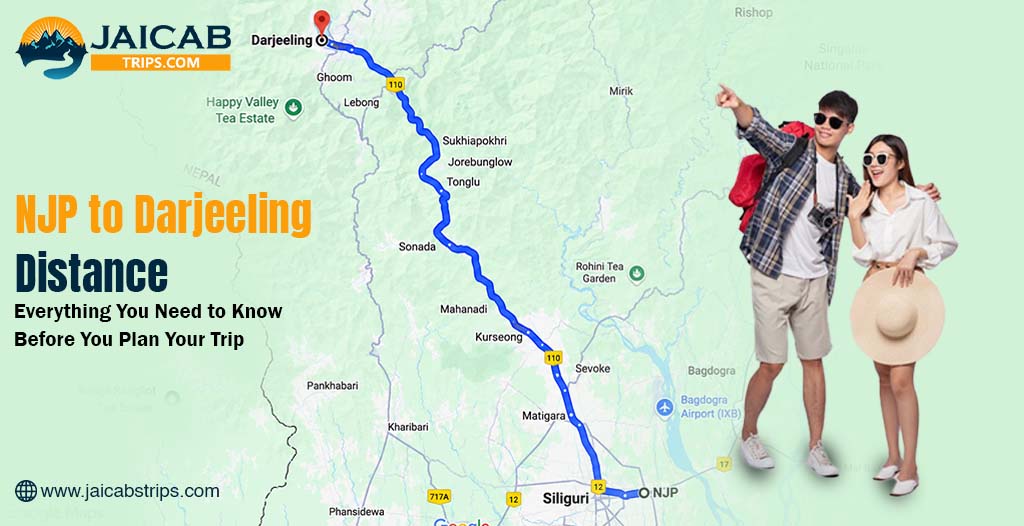
You have just stepped off the train at New Jalpaiguri Railway Station. You are a bit tired of heavy bags on your shoulders. But you feel the cool Himalayan weather at the station itself. It is a hint of what is waiting ahead of you- with its lush green tea gardens, exotic Kanchenjunga view and misty clouds. Before you set foot, there is one question buzzing in your head- how far is Darjeeling from here? With Jai Cab Trips, a trusted travel agency, you make your smartest choice. Your journey will be exciting and hassle-free. NJP to Darjeeling Distance: The Numbers The distance between NJP and Darjeeling is approximately 70 – 75 km. You never know what is waiting for you. It depends entirely on the route taken. The distance varies due to the number of linking paths, weather conditions and time of travel.  Route Approximate Distance Approximate Time Via Hill Cart Road (NH 55) 75–82 km 3 to 3.5 hours Via Rohini Road (Alternate) 73–78 km 2.5 to 3 hours Via Mirik (scenic detour) 90–95 km 4 to 4.5 hours Routes from NJP to Darjeeling Explained The various routes that are taken by the drivers from NJP to Darjeeling are explained as follows. Via Hill Cart Road (NH 55) – The Classic Route The most popular road to travel for NJP to Darjeeling is National Highway 55 (called Hill Cart Road previously) via Siliguri, Sukna, Kurseong, up to Darjeeling. It is maintained, commonly driven by drivers, and one can have a decent stop at the pleasant hill town of Kurseong if time permits. Via Rohini Road – The Faster Alternate Rohini Road is a thinner, usually faster road which bypasses a bit of the congestion in and around Kurseong town. A knowledgeable driver in a vehicle knows this shortcut during the height of tourist season when traffic on NH 55 is thick. Via Mirik – The Scenic Detour If you have leisure time or want to include a picturesque lake town in your itinerary, the deviation through Mirik adds about 15-20 Kms, and you get to stay at tranquil Mirik Lake. Jai Cab Trips can include this deviation as a custom trip upon request.  How Long Does the NJP to Darjeeling Journey Actually Take? The distance between NJP and Darjeeling is more than 70 kms. It takes nearly 3 hours to 4 hours, depending on the condition of the road. The number can mislead you. A mountain road is always unpredictable. A mountain road is sometimes winding and sometimes narrow. They are subject to traffic, weather, and seasonal road conditions. Transport Options from NJP to Darjeeling There are several ways to cover the NJP to Darjeeling distance, as per your choice, interest and budget. 1. NJP to Darjeeling Car Rental (Private Cab) -Recommended Overall, hiring an NJP to Darjeeling car rental with Jai Cab Trips is the most convenient and effective option you could choose. You will get your choice of vehicle and a professionally experienced driver who is comfortable driving through hilly areas. Approximate fare for a private cab: Hatchback / Sedan (4-seater): ₹2,500 – ₹3,000 SUV / Innova (6-7-seater): ₹3,500 – ₹4,000 Premium / Luxury vehicle: Ask for details Fares may vary slightly by season. Jai Cab Trips offers transparent, upfront pricing with no hidden charges. 2. NJP to Darjeeling Shared Taxi -Budget Option NJP to Darjeeling taxi share services are available outside the NJP railway station. In taxi share, Sumos are usually used, and Shared Sumos carry 8–10 passengers and depart only once full. Cost per person: ₹200 -₹400 approximately Departure: No fixed schedule -leaves when full Travel time: Longer, as the vehicle makes multiple stops Budget, but be warned that the compromise here is the lack of a fixed schedule, inflexibility for any stop-overs and sharing with strangers for 3+ hours of winding, mountain roads. A private cab is infinitely more practical for families, elderly travellers or those with plenty of luggage. 3. Toy Train (Darjeeling Himalayan Railway) – Heritage Experience The famous Darjeeling Himalayan Railway (a World Heritage Site) between NJP and Darjeeling. It is more of a heritage train trip. A ride takes 6-8 hours. It is an enchanting and very slow journey. It is not a good option to travel from NJP to Darjeeling as it takes longer hours. 4. Government Bus – Basic Option State transport buses run from Siliguri (not directly from NJP) to Darjeeling. Several buses run from Tenjing Norway Bus stand every day to Darjeeling. They are very crowded and not recommended for travellers with luggage or those arriving at NJP directly. What to Expect on the Road from NJP to Darjeeling The drive from NJP to Darjeeling is genuinely one of the most scenic in all of India. Here is a quick preview of what you will pass through: Siliguri City: Your cab takes you through the bustling gateway town of Siliguri after leaving NJP, before you finally begin climbing towards the hills. Sevoke and Coronation Bridge: As the roads finally begin to climb, you get to cross over the iconic colonial bridge on the River Teesta – Coronation Bridge, you would surely want to have your camera at the ready. Kurseong: About midway through the climb, we cross through Kurseong. It’s a quiet hill station with a few tea gardens and viewpoints, and a nice spot for breakfast. Ghoom: As you approach the Queen of Hills, you pass through Ghoom. It is an interesting place as it is regarded as the highest railway station in India. Another exciting place in Ghoom is watching the Batasia Loop. The toy train here runs in a circular motion. Best Time to Travel from NJP to Darjeeling While Darjeeling is a year-round destination, the journey from NJP is most pleasant during: March to May: Clear skies and flowers bloom. Roads are beautiful. Kanchenjunga can be fully viewed. September to November: Clarity after the monsoon. Cool temperatures. Many festivals. December to February: Very cold. But beautiful. Higher mountains will have

NJP to Darjeeling Distance: Everything You Need to Know Before You Plan Your Trip Read More »

Why Renting a Car in Darjeeling is Better Than Taking Shared Taxis — Here’s the Truth

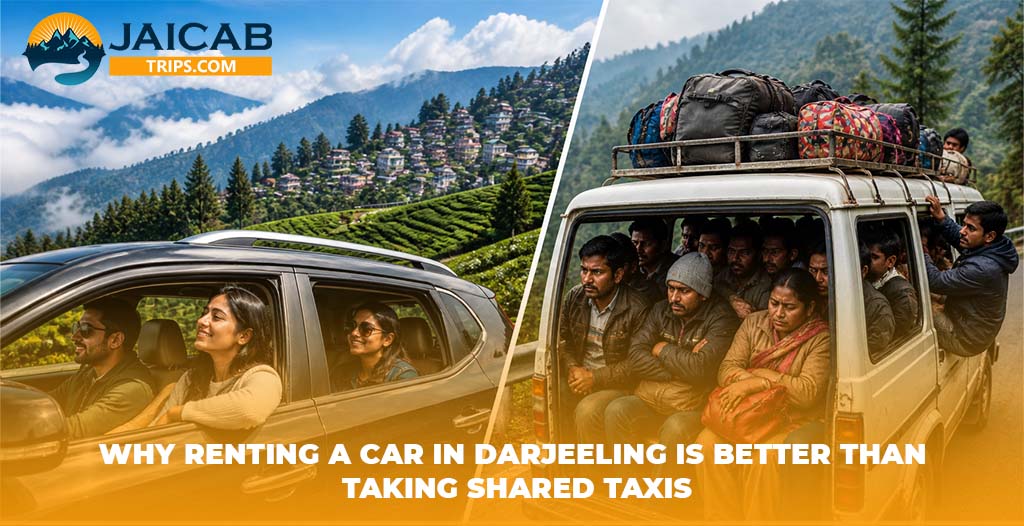
The Queen of the Hills, Darjeeling, feels exciting when explored elegantly. The beauty of this Himalayan town is discovered between the major landmarks, and the emerald slopes of tea gardens to the sunrise over Kanchenjunga. Travellers usually face one key decision—private car rental or shared taxis. Shared taxis are a local way of life, but in many cases, they do not correspond to the demands of a traveller for comfort and flexibility. In case you are going to visit this legendary hill station, this is the reality as to why opting to use a private Darjeeling taxi service is the better option to explore the area. If you’re planning your trip, here’s why opting for a car rental in Darjeeling is the smarter choice.  Which one is Better? Shared Taxi or Private Car Shared taxis (normally Tata Sumos or Mahindra Boleros) are the lifeblood of North Bengal. They are economical and common. They usually operate on a ‘fill-to-capacity’ basis. This implies that a six or seven-passenger vehicle usually carries ten passengers. This is feasible in a short journey around the town. It may be physically exhausting even on a three-hour climb out of Siliguri or a day of sightseeing around Darjeeling. 1. Complete Control Over Your Travel Time Shared Taxi: They are mini-buses. They stick to regular schedules and do not take off until all the seats are sold. You may have to wait an hour in a dusty stand before you begin your journey. Private Car: Have a car rental in Darjeeling, you are the boss. You determine the time you start the day and when you end it. In case you wish to sleep in or arrive at 4:00 AM to have a sunrise, the car is ready to take you. 2. Better Comfort on Mountain Roads Shared Taxi: These are packed cars (typically Sumos) in order to maintain low costs. A vehicle that is designed to accommodate 7 people usually has 10 occupants. The middle row is where you will probably be with zero legroom. Private Car: You select the one that suits you. Either a Swift couple or an Xylo family, you have dedicated seating and improved suspension, which is crucial in avoiding motion sickness during hairpin turns. 3. More Safety, Privacy & Peace of Mind Shared Taxi: You are put into a crowded car with 9 strangers. Family discussions are not private and you do not control the hygiene or behaviour of other passengers. Private Car: With a car rental in Darjeeling, it is less risky to the children and the older and the driver is concerned only with the needs and safety of your group. 4. Sightseeing Flexibility Shared Taxi: The majority of shared cabs serve only between great destinations such as Chowk Bazaar and Ghoom. They will not bring you off to some offbeat places and side streets where the best cafes and views lie concealed. Private Car: A Darjeeling sightseeing taxi accompanies you throughout the day. You do not have to worry about how to get a ride back to your hotel and you can explore the Rock Garden, Peace Pagoda, and far-off tea estates. 5. Freedom to Stop for Photos Anytime Shared Taxi: Drivers are focused on completing trips quickly to pick up more passengers. They will not take your pictures, however pretty the sunset is. Private Car: Spot a beautiful waterfall or a scenic viewpoint? Just ask your driver to stop. You travel at your own pace, not someone else’s schedule. Why Renting a Car in Darjeeling is Better? Darjeeling is among them, where the process is as beautiful as the end. Cascading mountain roads, unexpected vistas, concealed monasteries, and tea gardens that seem to stretch as far as the eye can see – you simply cannot see all of this on some pre-determined fly-by or by chasing after common taxis. When renting a car in Darjeeling, you are free to do what you want to do at your own pace. Herein lies the reason why it is all: Go at Your own Pace – Pause at any moment when some view makes it necessary. Stay at Tiger Hill, or turn off to some small tea estate, or at the first sign of mountain chill, return home. No hurrying and no waiting. Cover More Ground – Darjeeling on its best spots, Sandakphu, Mirik, Lamahatta, Takdah, all of which are covered in the hills. A personal car would help you to cover different destinations within the same day without necessarily having to rely on public transportation, which is erratic. Comfort in the cold – mountain weather is always changing. Owning a vehicle implies that one is never caught in the rain or fog as one waits to share a ride with someone. Efficient with Families and Groups – Have old parents, children or baggage? A hired vehicle maintains everyone safe and united. Experienced Local Drivers – Most rental cars come with local drivers, who are experienced and know the shortcuts, the best dhabas, and the roads that Google Maps would map poorly. Economically with Groups – Full day car rental can be more cost-effective than 5 or more individual tickets or getting separate cabs. The mountains reward gradually those who proceed slowly. Hiring a vehicle in Darjeeling is merely the savvy choice to perform that. Top Places to Visit in Darjeeling with a Private Car With your personal vehicle, the whole map of Darjeeling is available. These are the best places to see in Darjeeling that you can easily see through a sightseeing taxi: Tiger Hill: The magnificent views of sunrise in the world. The sun colours the Kanchenjunga peaks with gold and pink colours. Batasia Loop and War Memorial: A green circle of railway. The Toy Train takes a 360-degree turn. It has a panoramic view of the town. Ghoom Monastery: The oldest Tibetan Buddhist monasteries. It has a statue of Maitreya Buddha, 15 feet high. Padmaja Naidu Himalayan Zoological Park: Special species such as Red Panda and Snow

Why Renting a Car in Darjeeling is Better Than Taking Shared Taxis — Here’s the Truth Read More »